The world of motorsport

Speed.Strategy.Science.

Get closer to the grid. Live race tracking, paddock intelligence, driver histories, and deep aerodynamic telemetry.

Latest Grand Prix (Round 19)

Mexico City Grand Prix

Autódromo Hermanos Rodríguez · Completed Nov 01, 2026

Kimi Antonelli (MER)P1 · World Champion 🏆
Lando Norris (MCL)P2 (+4.120s)
Charles Leclerc (FER)P3 (+11.890s)
Next Grand Prix (Round 20)

São Paulo Grand Prix

Autódromo José Carlos Pace, Interlagos · Nov 06-08, 2026

Sprint WeekendFormat
71 LapsDistance
Round 20 of 23Status
Live Standings

Championship Top 5

Live championship snapshot after Round 19 (Mexico City). Click any driver or team to open full history.

Drivers Top 5

Full Table ↗

Constructors Top 5

Full Table ↗
22Drivers
11Teams
KIMI ANTONELLI2026 World Champion
∞Ways to go faster
Paddock Wire

Latest News & Analysis

Breaking headlines, technical updates, and exclusive paddock insights.

World Champion Crowned Antonelli Mercedes World Champion
Title Decided · Mexico City GP

Andrea Kimi Antonelli Crowned 2026 Formula 1 World Champion!

With an emphatic victory at the Autódromo Hermanos Rodríguez following Austin's Sprint success, 20-year-old Andrea Kimi Antonelli creates history by mathematically securing his maiden Drivers' World Championship for Mercedes-AMG PETRONAS.

View final title standings ↗
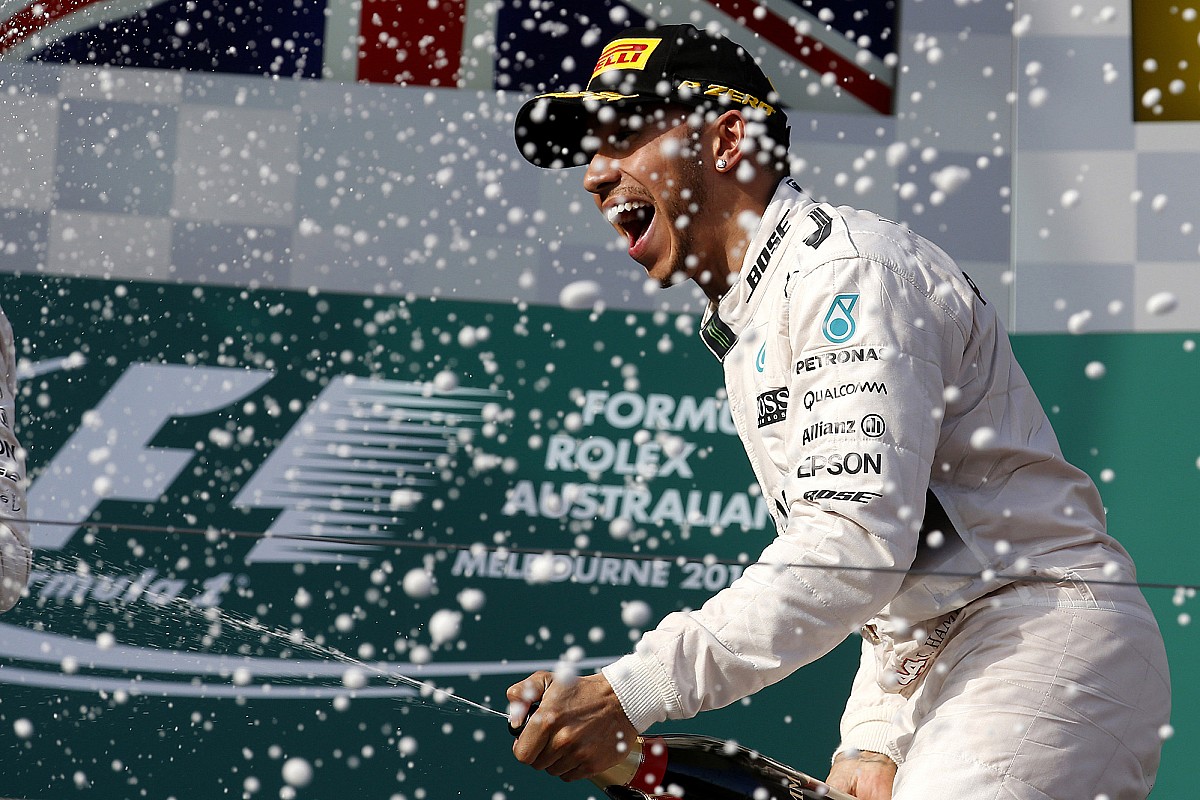
Cadillac F1
Constructors · 11th Team

Cadillac Floor Upgrade Delivers Solid Progress in Austin & Mexico

Bottas and Perez inch closer to the top 10 as Americas triple-header moves to Brazil.
Active Aero
Aerodynamics · 2026 Era

High-Altitude Aero: How Active Flaps Handled Mexico's Air Density

Telemetry reveals how active flaps mitigated cooling compromises at 2,200m elevation.
Ferrari Shakedown
Scuderia Ferrari

Ferrari Consolidates P2 Over McLaren Following Leclerc's Mexico Podium

Hamilton & Leclerc lead the charge into the high-downforce bowl of Interlagos.
The pinnacle of single-seaters

Formula One

Precision, pressure and performance. Formula 1 brings together elite drivers, world-class engineers and some of the most advanced racing machines ever built.

One grid. Eleven teams.

F1 / 2026

A season defined by active aerodynamics, sustainable power units, and Andrea Kimi Antonelli claiming the Drivers' Championship.

The people behind the helmets

The drivers

Meet the 22 drivers for the Formula 1 season, grouped side-by-side with their teammates according to the Constructors' Championship standings.

← Back to all drivers
Eleven constructors

The teams

Explore the teams, factory heritage, and driver pairings. Click any team card to open their constructor profile.

← Back to all teams
Every point matters

Points table

Standings updated through Round 19 (Mexico City GP). Andrea Kimi Antonelli is the confirmed 2026 World Champion.

Across the world

Race calendar

The 2026 Formula 1 World Tour schedule and completed rounds through Mexico City.

Built to the millimetre

Technology

Modern Formula 1 is an engineering contest as much as a driving contest. Tiny gains make all the difference.

◈

Aerodynamics

Active wings, sculpted floors and underbody tunnels shape airflow to create downforce while mitigating drag in X and Z modes.

ϟ

Power units

350kW electric recovery units coupled with 100% sustainable fuels deliver near-instant torque and ultra-efficient race deployment.

⌁

Tyre science

Compound stiffness, thermal degradation, and contact patch dynamics govern grip across hot apexes and high-energy sweepers.

⌘

Telemetry

Hundreds of sensors feed gigabytes of high-frequency data to garage pits, monitoring differential slip and suspension loads in real time.

The science of speed

Physics of F1

Why does a car stick to the track at speed? The answers lie in fluid mechanics, normal load, and friction circles.

↘

Downforce

Inverted aerofoils create Bernoulli low-pressure zones underneath the car, tripling effective car weight through high-speed turns.

◉

Grip & friction

Rubber molecules interlock with microscopic track crevices, with peak lateral coefficient requiring precise temperature windows.

Δ

Braking energy

Carbon ceramic discs decelerate cars from 330 to 80 km/h in under 2.5 seconds, dissipating massive kinetic energy into incandescent thermal glow.

∿

Cornering forces

Drivers sustain lateral accelerations exceeding 5g, demanding tremendous neck and core stabilization to counter centripetal inertia.

Speed changes everything.

Kinetic energy scales quadratically with velocity: E = 1/2 m v². Doubling speed quadruples the required stopping energy and dynamic tyre strain, making thermodynamic recovery vital.